
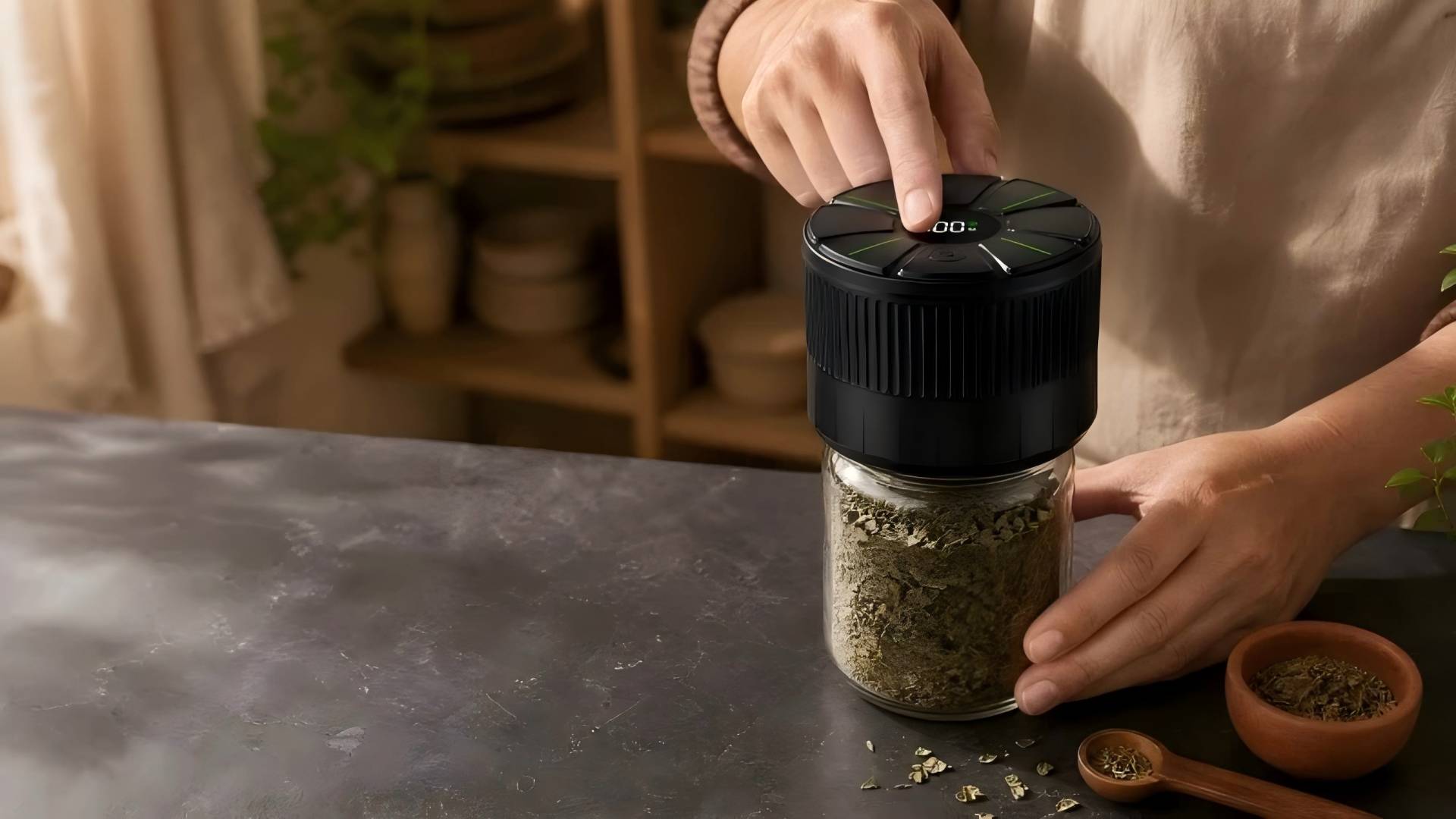
Electric Mason Jar Vacuum Sealer: How It Works
Electric Mason Jar Vacuum Sealer: How It Works
If you have ever opened a jar of coffee beans, nuts, or dried fruit and wished they would stay fresh a little longer, you may have come across electric Mason jar vacuum sealers.
These small countertop devices are designed to remove air from the space inside a Mason-style jar and help hold the flat lid tightly against the jar rim. The process is simple, but there is a little more to it than just pressing a button.
So, how does an electric Mason jar vacuum sealer actually work, and what is it useful for?
Quick Answer
An electric Mason jar vacuum sealer uses a small pump to pull air out of a compatible jar after a flat lid has been placed on the jar opening.
As the air is removed, the pressure inside the jar drops. The difference in pressure helps pull the flat lid tightly against the rim.
For everyday kitchen storage, this can be useful for dry foods such as:
Rice and grains
Coffee beans
Pasta
Oats and cereal
Nuts and seeds
Dried fruit
Herbs and spices
It is worth remembering that vacuum sealing is a storage method, not a replacement for refrigeration, freezing, or proper home canning.
White rice jar with flat metal lid
How Does an Electric Mason Jar Vacuum Sealer Work?
At first glance, the process looks almost too simple: put a lid on a jar, place the sealer on top, and turn it on.
Inside the device, however, a small electric pump is doing the important part.
1. Fill the Mason Jar
Start with a clean, dry jar and add the food you want to store.
For dry pantry ingredients, leave some space between the food and the lid rather than filling the jar completely to the top.
2. Place the Flat Lid
Put the flat metal lid directly on the mouth of the jar.
At this stage, the threaded outer ring is usually left off. The vacuum needs to be created around the flat lid itself.
3. Start the Vacuum Cycle
Place the electric sealer over the jar opening and start the cycle.
The pump draws air out of the jar. As the pressure inside decreases, the lid is pulled downward against the jar rim.
4. Check the Lid
Once the cycle is finished, remove the device and check the center of the lid.
A properly retained vacuum should keep the lid firmly down rather than allowing it to move freely.
The outer ring can then be fitted to keep the lid in place during normal handling.
What Can You Store in a Vacuum-Sealed Mason Jar?
This is where the appliance becomes useful in everyday kitchen life.
Rather than thinking of it as a device for storing everything, it makes more sense to think of it as a convenient way to organize suitable dry ingredients.
Food Why Vacuum Sealing Can Help Storage Tip
Coffee beans Helps reduce unnecessary air exposure Keep away from heat and light
Rice Keeps dry pantry ingredients contained Use a clean, dry jar
Oats Useful for portioning and pantry organization Avoid moisture
Nuts Helps limit exposure to air Store in a cool place
Dried fruit Can reduce exposure to moisture and air Check food condition before sealing
Pasta Convenient for long-term pantry organization Keep completely dry
Herbs & spices Helps keep jars organized Use dry utensils
The University of Missouri Extension lists foods such as dried herbs, spices, grains, legumes, nuts, seeds, and dried fruits and vegetables among foods that can be suitable for Mason jar vacuum sealing. University of Missouri Extension — Vacuum Packaging
A Simple Pantry Example
Imagine preparing your pantry for the week.
Instead of leaving half-open bags of oats, almonds, rice, and coffee on a shelf, you can portion them into individual Mason jars.
Vacuum sealing the jars adds another step to the storage routine, but it can also make the pantry look cleaner and make ingredients easier to see and organize.
For people who already use Mason jars regularly, that small change can be surprisingly convenient.
Penne pasta jar with mason jar sealer
What Does a Mason Jar Vacuum Sealer Not Do?
This is probably the most important part to understand.
A vacuum sealer removes air. It does not sterilize food, cook food, or turn perishable ingredients into shelf-stable foods.
Vacuum Sealing Is Not Canning
Traditional home canning relies on tested processing methods involving factors such as temperature, time, acidity, and pressure.
Vacuum sealing works differently.
It changes the air environment inside the container but does not provide the heat treatment required for safe shelf-stable canning.
The USDA explains that shelf-stable foods require appropriate processing methods, while foods that are not shelf-stable may still require refrigeration or freezing.
What About Wet or Perishable Foods?
Foods such as:
Fresh meat
Dairy products
Soups
Sauces
Cooked vegetables
Other highly perishable foods
should not simply be vacuum-sealed and left at room temperature.
Vacuum sealing does not replace safe food-storage practices.
If an ingredient normally needs refrigeration or freezing, removing air from the container does not change that requirement.
Why Use an Electric Sealer Instead of Manual Vacuuming?
Electric operation is mainly about convenience.
A manual vacuum tool can work for occasional use, but an electric device can make the process easier when several jars need to be sealed.
Feature Manual Vacuum Method Electric Vacuum Sealer
Operation Requires manual pumping Powered by a small pump
Multiple jars More repetitive Faster for repeated use
Effort More hands-on Press and start
Counter space Usually compact Usually compact
Best for Occasional sealing Regular pantry organization
For someone who only seals one jar every few weeks, either option may be enough.
For weekly meal prep, pantry organization, or storing several dry ingredients at once, the convenience of an electric design becomes more noticeable.
What Should You Look for When Choosing One?
Not every feature matters equally.
If you are comparing an electric jar vacuum sealer, start with the basics.
Jar Compatibility
Make sure the device works with the jar sizes and lid styles you already use.
Compatibility is more important than having a long list of extra features.
A Reliable Seal
The most useful result is a lid that remains firmly held after the device is removed.
A simple, repeatable sealing process is generally more valuable than a complicated control panel.
Easy Cleaning
The sealing area and gasket come into contact with the jar opening, so they should be easy to inspect and clean.
This matters especially if you use the device frequently.
Compact Design
Most people do not want another large appliance taking over the kitchen counter.
A compact design is easier to keep within reach without creating extra clutter.
For example, HTPOW offers a compact jar-top vacuum sealing design intended for this type of everyday kitchen use. The important thing is still to match the device with your jars, lids, food-storage habits, and cleaning routine.
A Simple Vacuum-Sealing Routine
Once you get used to the process, it only takes a few steps:
Clean jar → Add dry food → Place flat lid → Vacuum → Check the lid → Add outer ring → Store appropriately
The University of Minnesota Extension describes a similar basic process for vacuum sealing Mason jars and also emphasizes that vacuum sealing should not be confused with a food-preservation process that makes food shelf-stable. University of Minnesota Extension — Vacuum Sealing Mason Jars
Once the routine becomes familiar, there is very little guesswork involved.
Frequently Asked Questions
Is a jar vacuum sealer the same as a regular food vacuum sealer?
Not exactly.
A countertop food vacuum sealer usually removes air from specially designed plastic bags or containers. A jar vacuum sealer is designed to work with compatible Mason-style jars and flat lids.
Do I need the outer ring when vacuum sealing?
Generally, the flat lid is placed on the jar first, while the threaded outer ring is installed after the vacuum cycle.
Always follow the instructions supplied with your particular jar and device.
Can I vacuum seal coffee beans?
Coffee beans are one of the more practical dry-food applications. Vacuum sealing can help reduce unnecessary exposure to air, although storage conditions such as heat, light, and moisture still matter.
Can I vacuum seal flour and rice?
Yes, dry pantry staples such as flour and rice are common examples of foods used with Mason-style vacuum sealing.
Make sure the jar and lid are clean and completely dry before sealing.
Does vacuum sealing make food last forever?
No.
Vacuum sealing does not stop every form of food deterioration, and it does not make perishable food safe to leave at room temperature.
Think of it as one part of a storage routine rather than a replacement for proper food preservation.
How do I know if the vacuum worked?
After removing the device, check the flat lid.
If the lid stays firmly pulled down and does not easily flex or lift, the vacuum has likely been retained. If it releases immediately, check the jar rim, lid, gasket, and sealing surface before trying again.
The Bottom Line
An electric Mason jar vacuum sealer is a fairly simple kitchen tool with a straightforward job: remove air from a compatible jar and help the flat lid stay firmly sealed against the rim.
Its most natural use is with dry pantry foods such as grains, coffee, nuts, pasta, herbs, and dried fruit.
The biggest thing to remember is what it doesn't do. Vacuum sealing is not the same as canning, sterilizing, or refrigeration.
Used for the right foods and as part of a sensible storage routine, it can be a convenient little addition to a well-organized kitchen.
Electric Mason Jar Vacuum Sealer: How It Works

